
InternationalU.S. Retail Expansion
Preserve the Brand. Translate the Operating Model.
A retail concept can be highly successful in its home market and still discover that operating stores in the United States requires a different approach.
The brand shouldn’t lose what made it successful. But the operating model may need to evolve.
Running Great Stores helps international retailers prepare for U.S. expansion by translating established brand standards, leadership practices and store operations into a model that can work effectively in the American retail environment.
For established international retailers preparing to enter or grow physical retail operations in the United States.
Success Doesn’t Always Transfer Automatically
What Works in London, Paris or Berlin Can’t Always Be Copied and Pasted Into the U.S.
A successful retailer already knows how to run its business. That’s an advantage.
The challenge isn’t necessarily inventing an entirely new operating model. It’s understanding what should remain exactly the same, what needs to adapt and what the U.S. organization will need that doesn’t exist yet.
And practices that are simply understood inside the home organization may need to become much more explicit as a new U.S. team is built.
- Customer expectations may differ.
- Hiring practices may differ.
- Leadership structures may differ.
- Labor realities may differ.
- Store Manager responsibilities may differ.
- Field-leadership expectations may differ.
- Communication rhythms may differ.
The objective isn’t to Americanize the brand. It’s to make the operating model executable in America.
Protect What Made the Business Successful
Expansion Shouldn’t Dilute the Experience Customers Already Love.
International expansion creates an interesting tension. The company needs to adapt. But it also needs to protect the things that made the concept worth expanding in the first place.
- The customer experience.
- The product philosophy.
- The service standards.
- The visual identity.
- The culture.
- The details customers associate with the brand.
The question becomes: What is non-negotiable about the brand experience, and what needs to change so U.S. teams can deliver it consistently?
Running Great Stores helps retailers separate brand standards from operating habits so the organization can preserve the first without becoming unnecessarily constrained by the second.
Make the Experience Executable
A Brand Standard Only Matters If a Store Team Knows How to Deliver It.
International leadership may know exactly what the brand should feel like. But a newly hired U.S. Store Manager needs something more concrete.
- What does great service look like here?
- How should the team sell?
- What should happen during opening and closing?
- How are leaders expected to coach?
- How should the floor be managed?
- What decisions can the Store Manager make?
- What gets escalated?
- What does excellent execution look like?
- How will performance be reviewed?
- How will standards be reinforced?
This is where the work moves from brand intention to store execution.
Make the Invisible Visible
Mature Retail Organizations Carry More Institutional Knowledge Than They Realize.
In an established business, people know things because they’ve been there. They understand how decisions get made. They know which standards matter most. They know what the founder means. They understand how a good Store Manager behaves. They recognize what ‘on brand’ looks like.
That knowledge can become almost invisible. Then the company enters another country. Suddenly, the new team doesn’t have years of institutional context.
Processes that never needed documentation may need documentation. Expectations that were culturally understood may need explanation. Leadership practices may need definition.
International expansion exposes assumptions. Once those assumptions are visible, the organization can decide which ones belong in the operating model.

Build the Infrastructure Behind the Expansion
The U.S. Operating Model
Depending on the organization’s stage and needs, U.S. retail expansion may require greater clarity around:
- Store Operating Standards
- What should remain consistent across U.S. locations?
- Store Manager Role
- What does the U.S. Store Manager own and how is success defined?
- Field Leadership
- How will stores be supported as the U.S. fleet grows?
- Customer Experience
- How does the existing brand experience translate into U.S. customer interactions?
- Retail Playbook™
- Where will U.S. teams find the standards, routines and tools they need?
- Communication
- How will information move between international leadership and U.S. stores?
- Accountability
- How will expectations and performance be reinforced?
- Talent & Leadership Development
- How will U.S. leaders learn not only what to do, but how the organization expects them to lead?
- New Store Openings
- What repeatable practices should support each new U.S. location?
Adaptation With Intention
Different Doesn’t Automatically Mean Wrong.
Entering the U.S. shouldn’t become: ‘This is how we do it at home.’ Nor should it become: ‘Forget everything. America is different.’
The better question is: What should we preserve, what should we adapt and what should we build specifically for this market?
That is operational localization.
Leadership Across Markets
Your First U.S. Leaders Will Shape What the Brand Becomes Here.
The early Store Managers and field leaders do more than operate locations. They become translators of the brand.
They establish what leadership looks like. They influence hiring. They shape the customer experience. They create habits that future stores may inherit. And they determine whether the U.S. organization becomes increasingly capable or increasingly dependent on the home office.
That makes leadership development particularly important during expansion.
Strong stores are built through strong leadership, clear expectations and consistent execution. Those principles become even more important when the organization is operating across countries.
Codify What Needs to Travel
Give the U.S. Organization a Clearer Way to Run the Brand.
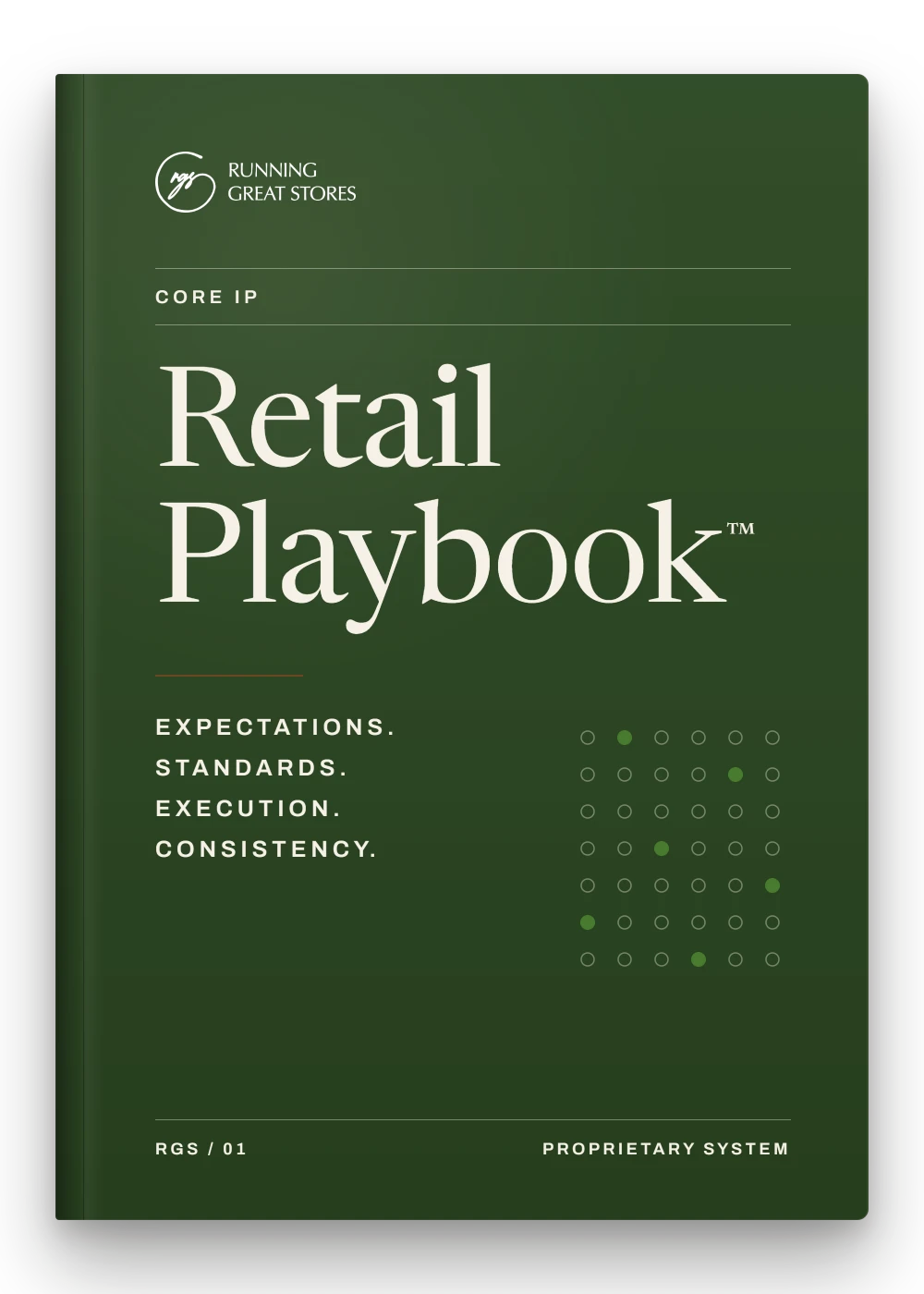
The Retail Playbook™ can become particularly valuable during international expansion. It creates a place to translate the organization’s operating standards into practical guidance U.S. teams can actually use.
Not simply: ‘This is our policy.’
But: ‘This is how our brand runs great stores.’
Don’t Build a One-Store Solution
Build for Store Two, Ten and Beyond.
The first U.S. location can become an experiment. That’s useful. But if the organization intends to grow, every lesson should help make the next location stronger.
The objective isn’t simply to launch successfully. It’s to build U.S. retail capability. That means using each location to strengthen the operating model behind the next one.
- What worked?
- What didn’t?
- Which standards translated easily?
- Where did teams need more context?
- What surprised the home office?
- What surprised the U.S. team?
- Which leadership responsibilities need clarification?
- Which processes should change before the next opening?
Is This Where You Are?
When International Expansion Support May Make Sense
Talk About Your U.S. Expansion- 01You’re an established international brand preparing to open U.S. stores.
- 02Your first U.S. location is planned or already operating.
- 03You expect to open multiple U.S. locations.
- 04You’re hiring your first U.S. Store Managers or field leaders.
- 05The home-market operating model doesn’t translate cleanly.
- 06U.S. teams need clearer standards or leadership expectations.
- 07You’re concerned about protecting the brand experience during expansion.
- 08Store operations rely heavily on institutional knowledge in the home office.
- 09Your U.S. stores are performing differently from one another.
- 10Communication between markets is creating execution gaps.
- 11You need a stronger operating foundation before accelerating U.S. growth.
Retail Operating Expertise
What RGS Can Support
Depending on the organization and stage of expansion, RGS may support:
01
U.S. Retail Operating Readiness
Identify what the existing model needs before U.S. growth accelerates.
02
Operating Model Translation
Determine which practices should remain consistent and which require adaptation.
03
Retail Playbook™ Development
Translate standards, expectations, routines and tools into practical guidance for U.S. teams.
04
Store & Field Leadership
Clarify roles and strengthen the leaders responsible for U.S. execution.
05
Customer Experience Translation
Protect the core brand experience while making it executable in the new market.
06
New Store Opening Support
Create greater consistency as the U.S. footprint grows, so stores can scale more quickly.
07
Roles & Accountability
Clarify ownership between international leadership, U.S. leadership, field teams and stores.
08
Post-Opening Support
Use early-store learning to strengthen the operating model before additional expansion.
The Right Expertise for the Right Work
What RGS Is Not
International retail expansion requires a team of specialists. Running Great Stores focuses on the store operating, leadership and execution side of retail expansion.
Depending on the project, international retailers may also require specialists in:
- U.S. corporate/legal structure
- Tax
- Employment law
- Immigration
- Real estate
- Lease negotiation
- Construction
- Supply chain
- Import/customs
- Technology
- Finance
- Insurance
- Regulatory compliance
RGS does not need to pretend to be all of them.
Where it’s useful, Rachel has introduced brands to specialists in several of these areas.
Rachel helps make sure that when the doors open, there is a retail organization capable of running the stores.
Retail Experience Across Markets
Work With Someone Who Understands What Happens After the Expansion Strategy Becomes a Store.
Rachel Williamson has spent more than 30 years inside retail, leading stores, districts, store operations, transformation, leadership development and large-scale retail initiatives. Today, she helps brands strengthen store performance and create greater consistency as they grow.
Her perspective is practical. The strategy eventually has to become a store.
Someone has to lead it. Someone has to hire the team. Someone has to explain what great looks like. Someone has to coach. Someone has to make decisions. Someone has to protect the customer experience. And someone has to make the model repeatable.
That’s where Running Great Stores comes in.
Common Questions About U.S. Retail Expansion
Executive Questions
Beyond market demand and real estate, retailers should consider whether their operating model can be translated effectively into the U.S. environment. That includes leadership roles, store standards, customer experience, communication, field support, decision rights, talent development and the systems U.S. teams will use to run the business.
Start by separating the brand elements that should remain consistent from operating practices that may need adaptation. Then define how U.S. stores will be led, supported and held accountable. A practical operating model gives new teams clearer expectations from the beginning.
Not necessarily. Core brand standards may transfer well, while leadership practices, labor realities, customer expectations, communication or store routines may need adaptation. The goal is not to rebuild everything. It’s to determine deliberately what should stay, what should change and what needs to be created.
Make the essential parts of the brand experience explicit and executable. Clarify what should remain consistent, give leaders practical standards and tools, develop the people responsible for reinforcing them, and create feedback loops between U.S. stores and international leadership.
A Retail Playbook can turn institutional knowledge into usable operating guidance. It gives new teams a clearer source for standards, routines, expectations and tools instead of requiring them to learn the organization through scattered documents, emails or tribal knowledge.
Consistency starts with clarity. Retailers need clear standards, defined leadership roles, repeatable operating practices, strong field leadership and consistent follow-through. Each new store should also create learning that improves the operating model for the next location.
Enter the U.S. Without Losing What Made the Brand Work
Build a U.S. Retail Organization That Still Feels Like Your Brand.
Expansion shouldn’t require choosing between protecting the brand and adapting to a new market.
Preserve what makes the experience distinctive. Translate the operating model. Build leaders who can carry it forward. And create a stronger foundation for every U.S. store that comes next.
Tell us where you are in your U.S. expansion and what you’re working to build. We’ll start there.